Aluminum Profiles for Industrial Equipment: The Ultimate Guide for Engineers & Buyers
- By:SJHM
- Date:17-09-2025
In the dynamic world of industrial manufacturing, efficiency, flexibility, and strength are non-negotiable. The quest for better materials and building methods has led to the widespread adoption of a revolutionary solution: aluminum profiles for industrial equipment. These modular T-slot extrusions have become the backbone of modern factories, enabling the rapid creation of everything from complex automation cells to simple workstations.
At Shijun Hongmao Aluminum, we are at the forefront of this innovation, providing high-quality, precision-engineered aluminum extrusions that empower industries to build smarter, faster, and stronger. This comprehensive guide will delve deep into why aluminum profiles are the ideal choice for industrial applications, exploring their benefits, types, applications, and how to select the perfect profile for your project.
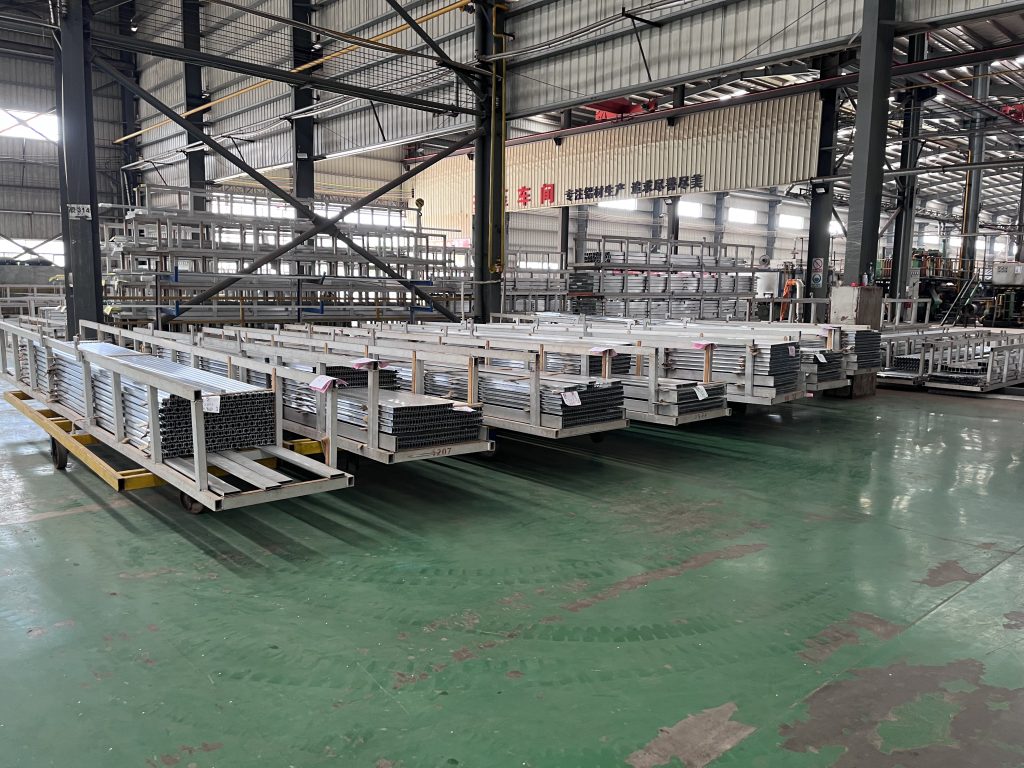
aluminum profiles for industrial equipment.
Why Aluminum Profiles are the Superior Choice for Industrial Framing
The shift from traditional welded steel frames to modular aluminum extrusions is driven by a powerful combination of performance and economic benefits. Here’s why aluminum extrusions for industrial machinery dominate modern design.
1. Unmatched Design Flexibility and Modularity
The most significant advantage of using industrial aluminum framing is its modular nature. Engineers and designers can prototype, build, and modify structures with incredible speed. Changes are as simple as loosening a few bolts and repositioning components. This supports an agile, iterative design process, drastically reducing time-to-market for new equipment.
2. Exceptional Strength-to-Weight Ratio
Aluminum alloys like 6061-T6 and 6063-T5, commonly used for industrial-grade aluminum profiles, offer remarkable strength while being approximately one-third the weight of steel. This reduces the overall weight of machinery, making it easier and cheaper to transport, install, and reposition on the factory floor.
3. Superior Corrosion Resistance
Aluminum naturally forms a protective oxide layer, making it highly resistant to rust and corrosion. This is a critical feature for equipment operating in harsh environments, such as food and beverage processing plants, pharmaceutical cleanrooms, or chemical laboratories that require frequent wash-downs.
4. Significant Cost and Time Savings
While the raw material cost per foot might be higher than steel, the total cost of ownership is often lower. This is due to drastically reduced labor costs (no need for skilled welders, grinding, or painting), lower shipping costs due to lighter weight, and the potential for profiles to be disassembled and reused for future projects.
5. Ease of Assembly and Integration
The integrated T-slots are the defining feature of aluminum profiles for industrial equipment. They allow for the infinite and easy attachment of panels, sensors, motors, conveyors, guards, and other components using standard nuts and bolts. This eliminates the need for complex welding fixtures and precise, pre-drilled holes.
6. Clean and Professional Aesthetics
Extruded aluminum has a clean, modern, and professional appearance. It can be anodized in various colors (e.g., clear, black, metallic) for enhanced corrosion resistance, added surface hardness, and a finished look that reflects the quality of your equipment.
7. Sustainability and Reusability
In an era focused on green manufacturing, the reusability of aluminum profiles is a major benefit. A frame can be disassembled at the end of a project or product life cycle, and the materials can be used to build something new, minimizing waste and raw material consumption.
aluminum profiles for industrial equipment
Types and Series of Aluminum Profiles for Industrial Applications
Understanding the “series” classification is key to selecting the right profile. The series number typically refers to the size of the T-slot (in millimeters) and dictates the profile’s size and load-bearing capacity.
- 15 Series / 20 Series (Mini Profiles): Ideal for light-duty applications, small enclosures, interior framing, and lab equipment. They are compact and perfect for projects where space is limited.
- 30 Series / 35 Series (Light-Duty): A step up in size and strength, commonly used for smaller workstations, light machine guarding, and internal supports within larger frames.
- 40 Series / 45 Series (Standard-Duty): This is the most versatile and widely used category of aluminum profiles for industrial equipment. The 40mm and 45mm profiles are the workhorses for automation frames, conveyor supports, medium-duty workstations, and robotic safety guarding.
**The 45 series** often features an 8mm or 10mm slot, offering higher strength and compatibility with heavier loads than the standard 40 series.- 80 Series / 90 Series / 100 Series (Heavy-Duty): Designed for applications requiring extreme structural integrity. These large profiles are used as the main support beams for large automation cells, gantry robots, heavy conveyor lines, and large-scale assembly jigs.
- Specialty Profiles: Beyond standard bars, manufacturers offer profiles designed for specific functions:
- Conveyor Rail Profiles: Feature integrated tracks for guiding conveyor chains or belts.
- Panel Mounting Profiles: Include grooves to easily snap in and secure plastic or glass panels.
- Handrail Profiles: Engineered to meet specific OSHA and ISO safety standards for industrial guarding.
- Angles, Channels, and Custom Shapes: For bracing, reinforcing, and unique design requirements.
aluminum profiles for industrial equipment
Key Applications of Aluminum Extrusions in Industrial Settings
The versatility of aluminum profiles for machinery means they are found in virtually every corner of a modern factory.
1. Factory Automation and Robotics
This is one of the largest application areas. Aluminum extrusions form the structural framework for:
- Robotic work cells and safety fencing.
- Pick-and-place unit frames.
- Automated guided vehicle (AGV) structures.
- CNC machine enclosures and safety guards.
2. Machine Guarding and Safety Solutions
Building OSHA-compliant safety guards is simple and effective with T-slot aluminum. Polycarbonate or Lexan panels easily bolt onto the frames, creating transparent, strong barriers around presses, robots, and other hazardous equipment.
3. Material Handling and Storage Systems
- Custom carts and trolleys for transporting parts and tools.
- Modular shelving and racking systems that can be reconfigured as needs change.
- Lift assist devices and ergonomic manipulation arms.
4. Workstations and Assembly Jigs
Create ergonomic and highly organized workstations for assembly, inspection, and packaging. The profiles allow for the easy mounting of shelves, lighting, power strips, tool balancers, and bin racking, leading to significant gains in productivity.
5. Conveyor Systems and Lines
Aluminum profiles are used to build the entire support structure for conveyor systems of all sizes, from small belt conveyors to large chain-driven systems. Their straightness and rigidity ensure smooth and reliable material transport.
6. Testing and Measurement Equipment
The stability and vibration-damping characteristics of aluminum frames make them ideal for precision testing, inspection, and optical equipment that requires a rigid, non-deforming foundation.
aluminum profiles for industrial equipment
How to Choose the Right Aluminum Profiles for Your Industrial Project
Selecting the correct profile is critical for the safety, performance, and cost-effectiveness of your build.
1. Determine the Load Requirements
This is the most crucial step. You must perform a basic structural analysis to understand:
- Static Loads: The weight of all components the frame will support (motors, actuators, panels).
- Dynamic Loads: Forces from movement, vibration, acceleration, and deceleration.
- Safety Factor: Always incorporate a safety factor (e.g., 2:1 or 4:1) into your calculations to account for unexpected stresses. For heavy loads or dynamic applications, heavy-duty aluminum profiles (80 series and above) are necessary.
2. Select the Appropriate Profile Series
Match the series to your load and scale requirements. A small inspection jig might use 20 series, while a large gantry system will require 80 or 100 series profiles.
3. Consider the Operating Environment
- Standard Environments: Standard 6061-T6 or 6063-T5 alloys are sufficient.
- Wash-down/Chemical Exposure: Specify a higher-grade alloy if needed and ensure hardware is stainless steel (e.g., 304 or 316 SS) to prevent galvanic corrosion.
- High Temperatures: Note that aluminum’s strength decreases significantly at temperatures above 200°F (93°C). For high-temp applications, steel might be a better choice.
4. Plan for Integration and Accessories
Think about what you need to mount to the frame. Ensure you have the right brackets, hinges, plates, and fasteners from the same system. Using compatible accessories from a single supplier simplifies assembly and ensures optimal performance.
5. Don’t Neglect Aesthetics and Finish
Decide if a standard mill finish is acceptable or if an anodized finish is required for added corrosion resistance, hardness, and a professional appearance.
aluminum profiles for industrial equipment
The Future of Industrial Equipment Framing: Trends in Aluminum Extrusions
The industry continues to evolve. Key trends include:
- Lighter and Stronger Alloys: Development of new aluminum alloys and tempers that push the strength-to-weight ratio even further.
- Integrated Functionality: Profiles with built-in cable management channels, air lines, and data conduits to create cleaner, more organized machines.
- Digital Design Tools: Manufacturers are offering sophisticated 3D configurators and CAD libraries, making it easier than ever to design and visualize frames before purchasing.
- Focus on Sustainability: The inherent recyclability and reusability of aluminum will continue to be a major selling point as manufacturers strive to meet greener initiatives.
aluminum profiles for industrial equipment
Why Choose [Your Company Name] for Your Industrial Aluminum Profiles?
As a leading manufacturer and supplier of high-precision aluminum profiles for industrial equipment, we are committed to providing more than just a product. We offer a solution.
- Superior Quality: Our profiles are extruded from 6061-T6 and 6063-T5 alloys, ensuring consistent strength, straightness, and durability.
- Complete System Compatibility: We offer a full ecosystem of profiles, connectors, and accessories, all designed to work together seamlessly.
- Technical Expertise and Support: Our engineering team is ready to assist with your design challenges, offering expert advice on load calculations and optimal configuration.
- Fast and Reliable Delivery: We understand that downtime is costly. Our efficient logistics ensure you get the materials you need, when you need them.
- Custom Extrusion Capabilities: Need a unique profile for a specialized application? Our custom extrusion services can bring your specific design to life.
Ready to Build the Future of Industrial Equipment?
Leverage the power, flexibility, and efficiency of aluminum profiles for industrial equipment for your next project. Contact the experts at Shijun Hongmao Aluminum today for a quote, technical consultation, or to access our comprehensive CAD library and start designing.
aluminum profiles for industrial equipment
Learn more:http://www.sjhmalu.com