
Aluminum Accompanies Automobiles: In-Depth Applications and Future Trends of Aluminum Profiles for Cars in New Energy Vehicles and Traditional Automotive Fields
- By:SJHM
- Date:23-09-2025
Introduction: The “Two-Way Synergy” Between Aluminum and Automobiles from the Industrial Revolution to the Clean Energy Era
In the 1760s, the roar of steam engines ignited the Industrial Revolution; in the 1870s, the collision of petroleum and internal combustion engines propelled the rise of the automotive industry; today, under the global “dual carbon” goals and the wave of smart manufacturing, the automotive sector is undergoing a disruptive transformation from fuel-powered vehicles to new energy vehicles (NEVs). In this transformation, aluminum profiles for cars have emerged from the background to the forefront, leveraging their inherent advantages of “lightweight, high strength, corrosion resistance, and excellent thermal/electrical conductivity” to become a core material supporting automotive lightweighting, electrification, and intelligence.
As the world’s largest producer of primary aluminum and a major automotive manufacturing nation, China’s automotive industry is leveraging “lightweighting” as a fulcrum to tap into a trillion-yuan new energy market. This article focuses on the theme “Aluminum Accompanies Automobiles,” deeply analyzing the application scenarios, technical advantages, policy drivers, and future trends of aluminum profiles for cars in the automotive field, providing references for industry practitioners and investors.
I. Automotive Lightweighting: The Core Driver for the Rise of Aluminum Profiles for Cars
1.1 The Essence of Lightweighting: Balancing Safety, Energy Efficiency, and Performance
Automotive lightweighting is not merely a “weight reduction game” but a process of lowering the overall vehicle mass through material substitution, structural optimization, and process innovation while ensuring strength, safety, and durability. Studies show that a 10% reduction in vehicle weight can decrease fuel consumption by 6%-8% and increase driving range by 5%-7% (particularly significant for NEVs); emissions are also reduced by approximately 4%. For NEVs, lightweighting is a critical technological path to address “range anxiety”—with limited progress in battery energy density improvement, weight reduction has become the most direct breakthrough for extending range.
1.2 Aluminum’s Inherent Advantages: Why It Is the Preferred Choice for Lightweighting?
Compared to traditional steel, aluminum has a density of only 1/3 that of steel (approximately 2.7g/cm³ vs. 7.8g/cm³) but can achieve over 90% of steel’s strength through alloying and heat treatment processes. Additionally, aluminum boasts excellent corrosion resistance (naturally forming an aluminum oxide protective film), superior thermal/electrical conductivity (thermal conductivity is approximately three times that of steel, ideal for motor cooling), and ease of recyclability (recycling energy consumption is only 5% of primary aluminum production), perfectly aligning with the automotive industry’s demand for “low-carbon lifecycle management.”
II. Dual Drivers of Policy and Market: China’s Automotive Aluminum Industry Enters a Golden Era
2.1 National Strategy: Policy Support for Transitioning from a “Automotive Powerhouse” to a “Global Automotive Leader”
In November 2020, the General Office of the State Council issued the Development Plan for the New Energy Vehicle Industry (2021–2035), explicitly proposing to “promote high-quality, sustainable development of the NEV industry and accelerate the construction of a global automotive powerhouse,” with “lightweighting” listed as a key technical field. In 2023, the Ministry of Industry and Information Technology’s Industrial Carbon Peak Implementation Planfurther mandated: “Accelerate the promotion of lightweight materials in automotive applications; by 2025, NEVs are expected to account for approximately 25% of new vehicle sales, with a significant increase in the application proportion of lightweight materials.”
Driven by policy dividends, China’s NEV production and sales have ranked first globally for eight consecutive years (reaching 9.58 million units in 2023), driving explosive growth in demand for automotive aluminum. According to the China Society of Automotive Engineers, China’s automotive aluminum consumption is projected to exceed 10 million tons by 2025, with NEVs contributing over 60%.
2.2 Industrial Upgrading: Collaborative Innovation Between Automakers and Aluminum Enterprises
To meet lightweighting demands, automakers and aluminum processing enterprises are shifting from “material procurement” to “joint R&D.” Leading aluminum manufacturers have collaborated with NEV automakers to develop high-strength, high-toughness aluminum alloys (e.g., 6061-T6, 7075-T6) for core components such as vehicle body frames, motor housings, and battery trays. Through “integrated die casting + precision extrusion” processes, these partnerships achieve a 20%-30% weight reduction while enhancing structural strength—specifically leveraging aluminum profiles for cars.
III. “Full-Scenario Applications” of Aluminum Profiles for Cars in the Automotive Field: From “Skeleton” to “Details”
Thanks to flexible forming processes (extrusion, die casting, rolling, etc.), aluminum profiles for cars have penetrated “full-lifecycle” automotive components, covering three core areas: vehicle body structure, powertrain systems (battery/motor/electrical control), and chassis & accessories. Below is an analysis of key application scenarios:
3.1 Vehicle Body Structure: A Disruptive Shift from “Steel Armor” to “Aluminum Skeleton”
Traditional fuel-powered vehicles primarily use steel for their bodies, but NEVs are increasingly adopting “steel-aluminum hybrid” or “all-aluminum bodies” to achieve lightweighting. Applications of aluminum profiles for cars in this field include:
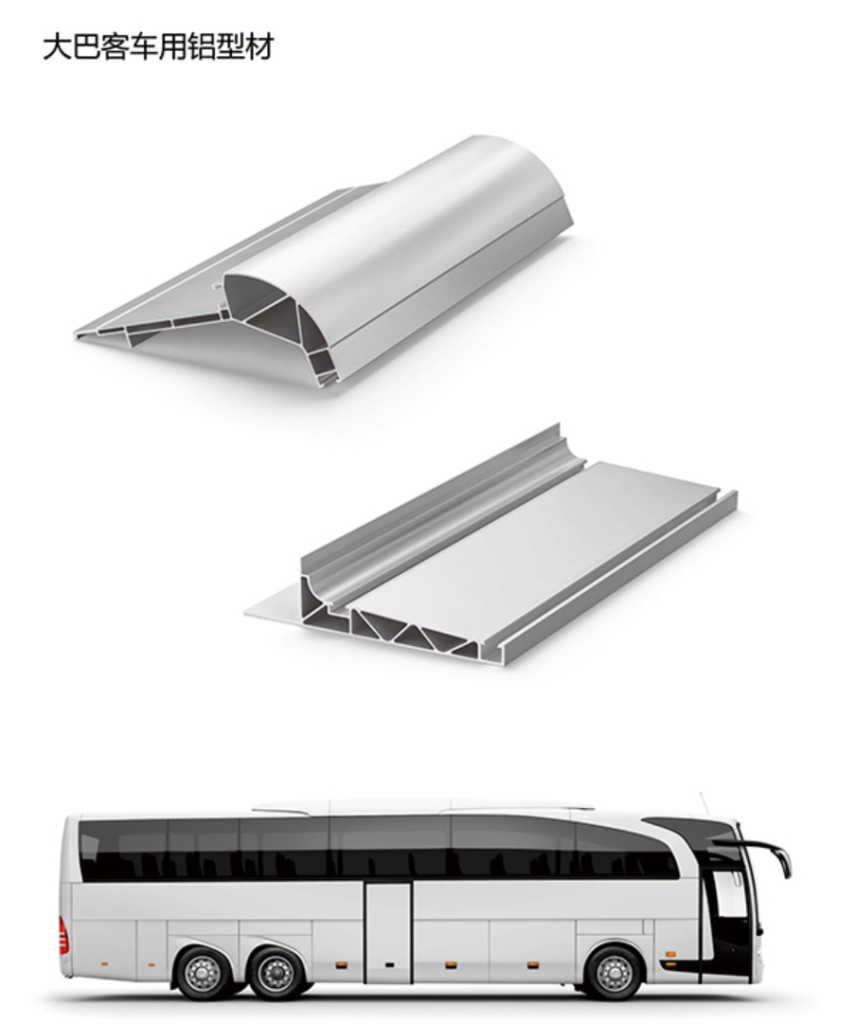
- Vehicle Body Frame: 6-series (6061, 6005) or 7-series (7075) aluminum extruded profiles are used to design “cage-style structures,” reducing weight by over 30% while ensuring collision performance (e.g., meeting C-NCAP five-star standards).
- Anti-Collision System: Safety components such as bumpers, anti-collision beams, and threshold beams require both energy absorption and impact resistance. Aluminum profiles for cars, designed with “multi-porous hollow structures” (e.g., industry-standard “honeycomb extruded profiles”), absorb more energy during collisions and are 40% lighter than steel components.
- Body Panels: Exterior components like hoods, doors, and trunk lids use 2-series (2024) or 5-series (5052) aluminum sheets combined with “hot stamping” processes, achieving surface flatness requirements while reducing weight.
3.2 Powertrain Systems: The “Core Battlefield” for Aluminum Profiles for Cars
The “powertrain systems” (battery, motor, electrical control) of NEVs account for 40%-50% of total vehicle costs and are critical for lightweighting:
- Battery System: The battery pack, which makes up 30%-40% of an NEV’s weight, directly impacts range through the lightweighting of its trays and structural components. Applications of aluminum profiles for cars here include:
- Battery Tray: 6061-T6 aluminum extruded profiles are used in “frame + base plate” integrated designs to replace traditional steel trays, reducing weight by over 50% (single tray weight drops from 80kg to 40kg). Aluminum’s corrosion resistance also extends battery pack life by resisting electrolyte and moisture intrusion.
- Battery Module Bracket: 5-series aluminum alloys (e.g., 5083), valued for their thermal conductivity, serve as heat dissipation brackets between modules, improving temperature uniformity and extending battery cycle life.
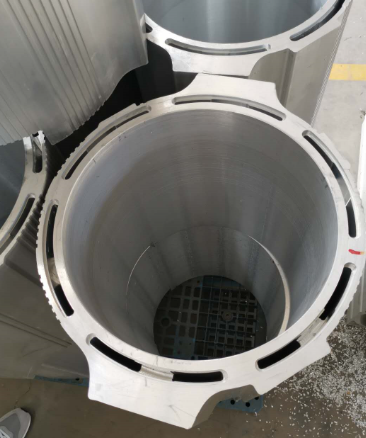
- Motor System: Motor housings require both heat dissipation and electromagnetic shielding. Aluminum profiles for cars (e.g., 3-series or 6-series) excel with high thermal conductivity (three times that of steel), rapidly dissipating motor heat to prevent overheating. Their low magnetic permeability also reduces electromagnetic interference, enhancing motor efficiency.
- Electrical Control System: Electrical control boxes demand high strength and vibration resistance. Aluminum profiles for cars, reinforced with “grid-like extruded structures,” maintain structural integrity while reducing weight by 20% and can be anodized to increase surface hardness (HV ≥ 150).
3.3 Chassis & Accessories: “Aluminum-Intelligent” Upgrades in Details
Beyond core components, aluminum profiles for cars are widely used in chassis and functional accessories to enhance overall vehicle performance and user experience:
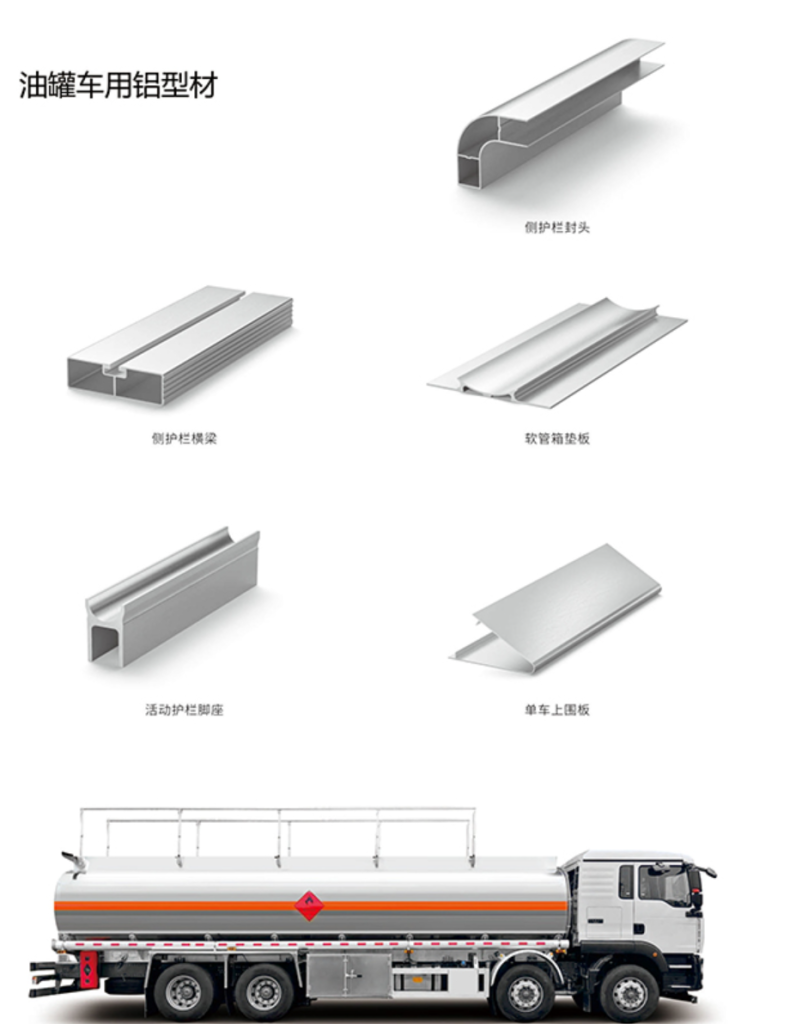
- Chassis Components: Control arms, steering knuckles, and connecting rods are manufactured using 7-series aluminum alloys (e.g., 7005) via forging + extrusion processes. These components are 50% lighter than steel parts and treated with anodization to reduce friction coefficients by 30%, improving wear resistance.
- Thermal Management Systems: Radiators for motors/batteries and air conditioning condensers require high thermal efficiency. Aluminum profiles for cars (pure aluminum or 3-series alloys), valued for their excellent thermal conductivity and ease of forming fin structures, have become the mainstream material for thermal systems (accounting for over 90% of radiator materials).
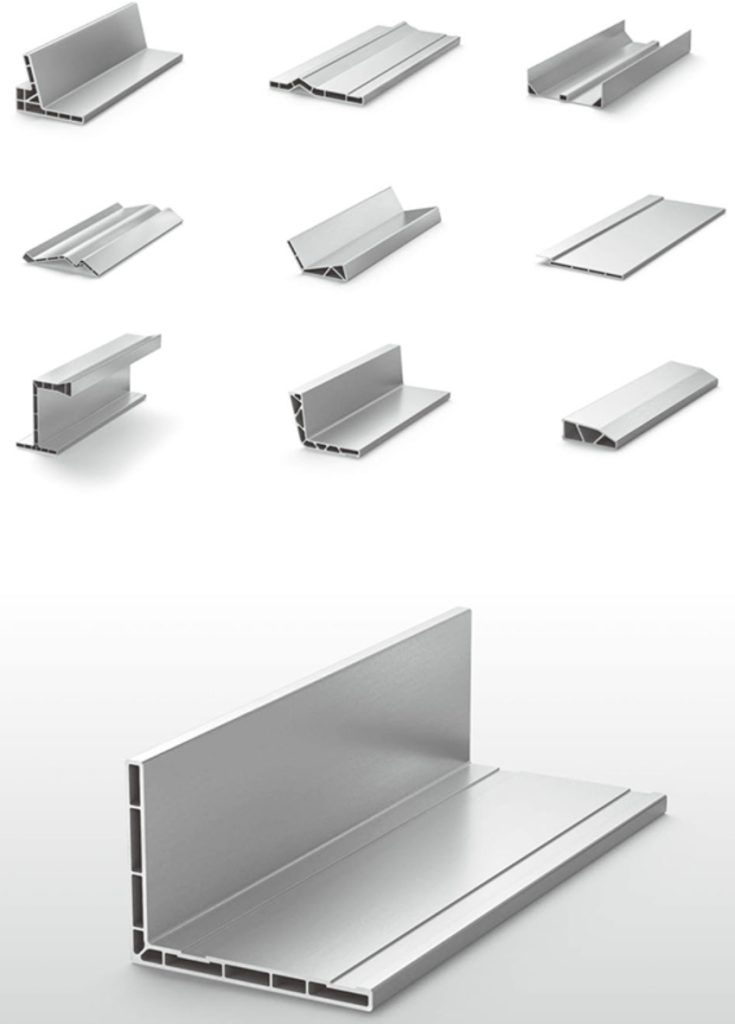
- Decorative & Functional Parts: Luggage racks, seat frames, pedals, and wiper mounts use 5-series or 6-series aluminum alloys, processed with surface spraying or anodization to balance aesthetics (e.g., matte, colored coatings) and durability.
IV. Future Trends: Deep Integration of Aluminum Profiles for Cars with the Automotive Industry
5.1 Popularization of All-Aluminum Bodies: From Luxury Models to Mainstream Markets
As aluminum costs decline and processes mature, all-aluminum bodies will transition from luxury brands (e.g., Audi A8, NIO ET7) to mainstream models. By 2030, all-aluminum body vehicles are projected to account for 15% of global production, with China’s market share exceeding 20%—driven by aluminum profiles for cars.
5.2 Innovation in Aluminum Matrix Composites: Breaking Performance Boundaries
Aluminum matrix composites (e.g., Al-SiC, Al-graphene), with higher strength (≥800MPa) and better thermal conductivity (≥200W/(m·K)), will emerge as candidate materials for next-generation automotive components. Leading aluminum enterprises are currently collaborating with the Chinese Academy of Sciences to develop “nano-reinforced aluminum matrix composites,” targeting applications in high-speed motor rotors and high-voltage battery enclosures—further expanding the use of specialized aluminum profiles for cars.
5.3 Circular Economy Closed-Loop: Full Lifecycle Management of Aluminum
Under the “dual carbon” goals, aluminum recycling will become critical. Automakers and aluminum enterprises are cooperating to establish a closed-loop system of “battery trays → recycling → recycled aluminum → new components” (e.g., “aluminum recycling industrial parks” by leading aluminum manufacturers). By 2030, China’s recycled aluminum proportion in automotive applications is expected to exceed 50%, reducing carbon emissions by 40%—a milestone enabled by the sustainable practices of aluminum profiles for cars.
Conclusion: Aluminum and Automobiles, Jointly Marching Toward a “Zero-Carbon” Future
From the steel-dominated era of the Industrial Revolution to the aluminum-driven clean energy era, materials have always been the “invisible engine” of industrial transformation. Amid the dual waves of NEVs and smart manufacturing, aluminum profiles for cars, with their core advantages of “lightweight, high strength, and sustainability,” are evolving from “auxiliary materials” to “core strategic resources.”
For the industry, seizing opportunities in aluminum profile applications is not only a key to enterprise technological upgrading but also a critical path to achieving “dual carbon” goals and advancing high-quality development in the automotive sector. As demonstrated by leading aluminum enterprises, the deep integration of aluminum and automobiles is accelerating the arrival of a lighter, more efficient, and more sustainable mobility future.
automotive lightweighting, applications of aluminum profiles for cars, aluminum use in new energy vehicles, industrial aluminum profiles, aluminum alloy vehicle bodies, battery aluminum trays, motor housing aluminum profiles, automotive anti-collision beams, lightweighting materials for cars, new energy vehicle industry planning, automotive emission reduction, aluminum applications in automotive powertrain systems, integrated die casting aluminum profiles, recycled aluminum in automotive applications, trends in aluminum profiles for cars, automotive lightweighting technology, aluminum matrix composites in automotive, all-aluminum vehicle bodies, manufacturing processes for automotive aluminum components.