
Aluminum Heat Sink Extrusion for Industrial Power Systems: Design, Applications & Thermal Performance
- By:SJHM
- Date:09-04-2026
Aluminum Heat Sink Extrusion for Industrial Power Systems: Design, Applications & Thermal Performance
In modern industrial systems, thermal management is no longer a secondary consideration — it is a core factor that determines system efficiency, reliability, and lifespan.
Applications such as motor drives, inverters, and power electronics systems generate significant heat during operation. Without effective cooling, performance degradation, component failure, and increased maintenance costs become inevitable.
This is where aluminum heat sink extrusion plays a critical role.
As a key solution in thermal engineering, aluminum extrusions enable the creation of complex heat sink geometries with high efficiency, structural integrity, and scalability. For engineers and procurement professionals, understanding how heat sink extrusion works — and how to optimize it — is essential.
What Is Aluminum Heat Sink Extrusion?
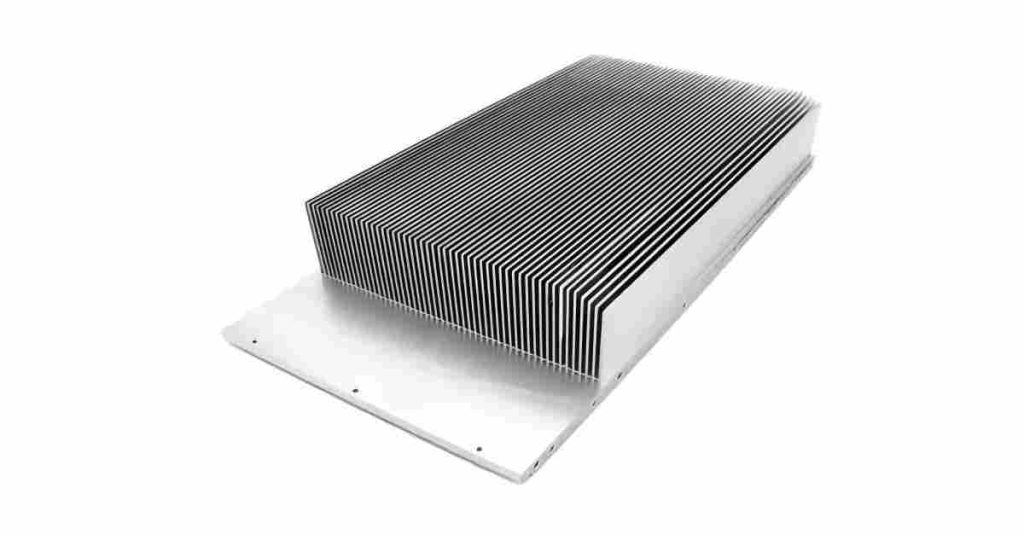
Aluminum heat sink extrusion is a manufacturing process where aluminum alloy is forced through a die to create profiles with specific cross-sectional geometries designed for heat dissipation.
These profiles typically feature:
- High-density fins
- Optimized spacing for airflow
- Integrated mounting structures
- Hollow or semi-hollow sections
Compared to other manufacturing methods, extrusion allows for:
- Complex shapes in a single process
- High repeatability
- Cost efficiency in mass production
Why Aluminum Is Ideal for Heat Sink Applications
Aluminum is widely used in thermal management due to its:
1. High Thermal Conductivity
Efficient heat transfer from electronic components to the surrounding environment.
2. Lightweight Properties
Critical for applications such as automotive and renewable energy systems.
3. Corrosion Resistance
Ensures long-term performance in industrial environments.
4. Excellent Extrudability
Allows for complex heat sink geometries with high fin density.
Key Applications of Aluminum Heat Sink Extrusion
Industrial Drive Systems
Motor drives and servo systems operate under continuous load, generating heat that must be dissipated efficiently.
Power Electronics
Applications include:
- IGBT modules
- Power supplies
- Industrial converters
These systems require stable thermal performance to ensure reliability.
Renewable Energy Systems
- Solar inverters
- Energy storage systems
- EV charging systems
Thermal stability directly impacts efficiency and lifespan.
Automation Equipment
Precision equipment requires stable temperature control to maintain accuracy and performance.
Engineering Challenges in Thermal Management
Designing effective heat sinks for industrial applications involves addressing several challenges:
- High power density
- Limited installation space
- Restricted airflow
- Thermal expansion and deformation
Design Principles for Aluminum Heat Sink Extrusion
Fin Density and Geometry
Higher fin density increases surface area but must be balanced with airflow efficiency.
Airflow Optimization
Proper spacing between fins ensures effective convection.
Structural Symmetry
Symmetrical designs improve thermal distribution and reduce distortion.
One-Piece Extrusion
Eliminates thermal resistance caused by joints or assembly.
Aluminum Alloys for Heat Sink Extrusion: 6061 vs 6063
6061 Aluminum
- Higher strength
- Suitable for structural applications
- Slightly lower extrudability
6063 Aluminum
- Better surface finish
- Superior extrudability
- Ideal for complex heat sink profiles
For most heat sink applications, 6063 aluminum extrusion is preferred.
Thermal Performance Optimization
Key factors influencing performance include:
- Surface area
- Airflow velocity
- Ambient temperature
- Material conductivity
Advanced designs may include:
- Forced air cooling
- Liquid cooling integration
- Surface treatments (anodizing)
Manufacturing Process of Heat Sink Extrusion
Die Design
Precision die engineering ensures consistent fin geometry and dimensional accuracy.
Extrusion Process
Controlled temperature and speed maintain profile integrity.
Cooling and Straightening
Prevents warping and ensures dimensional stability.
Surface Treatment
- Anodizing
- Powder coating
- CNC machining
Tolerance Control in Heat Sink Extrusion
Tolerance is critical for:
- Assembly fit
- Thermal interface contact
- Structural stability
A professional aluminum extrusion manufacturer ensures:
- Accurate die design
- Stable process control
- Inspection and measurement
Advantages of Custom Aluminum Heat Sink Extrusion
- Tailored thermal performance
- Reduced assembly complexity
- Improved reliability
- Lower total system cost
How to Choose an Aluminum Extrusion Manufacturer
Key criteria:
Engineering Capability
Ability to support design optimization.
Production Capacity
Capability to handle large or complex profiles.
Quality Control
Inspection systems and process consistency.
Surface Treatment
Complete finishing services.
Future Trends in Heat Sink Design
- Integration with smart systems
- Higher power density requirements
- Lightweight design for EV and renewable energy
- Advanced simulation-driven design
FAQ Section
What is aluminum heat sink extrusion?
A process used to create heat-dissipating profiles from aluminum.
Which alloy is best for heat sinks?
6063 aluminum is commonly used due to its extrudability.
Where are heat sink extrusions used?
In inverters, motor drives, power electronics, and renewable energy systems.
Conclusion
Aluminum heat sink extrusion is a critical solution for modern industrial and energy systems. By combining advanced design, optimized materials, and precise manufacturing, it enables reliable thermal management across a wide range of applications.
For engineers and buyers, understanding these principles is essential for achieving optimal performance and cost efficiency.
aluminum extrusion manufacturer: https://www.sjhmalu.com/about
aluminum extrusion tolerances guide:https://www.sjhmalu.com/aluminum-extrusion-automotive-6061-vs-6063
industrial heat sink aluminum, custom aluminum heat sink extrusion supplier,power electronics heat sink