Aluminum Extrusion for Automotive Parts: 6061 vs 6063 Aluminum Extrusion & How to Choose the Right Supplier
- By:SJHM
- Date:19-03-2026
Aluminum extrusion has become a cornerstone of modern manufacturing, especially in the automotive industry. As vehicle manufacturers continue to prioritize lightweighting, energy efficiency, and sustainability, aluminum extrusion for automotive parts is increasingly replacing traditional steel components.
Among the most widely used alloys in aluminum extrusion are 6061 and 6063 aluminum alloys. While both are popular, they serve different purposes depending on mechanical requirements, surface finish, and application environments.
aluminum profiles manufacturers,aluminum extrusion China manufacturer
In this guide, we will explore:
- The role of aluminum extrusion in automotive applications
- The differences between 6061 vs 6063 aluminum extrusion
- How to select the right alloy for your project
- What to look for in a reliable 6063 aluminum extrusion supplier
- Key design and sourcing considerations for engineers and buyers
What Is Aluminum Extrusion for Automotive Parts?
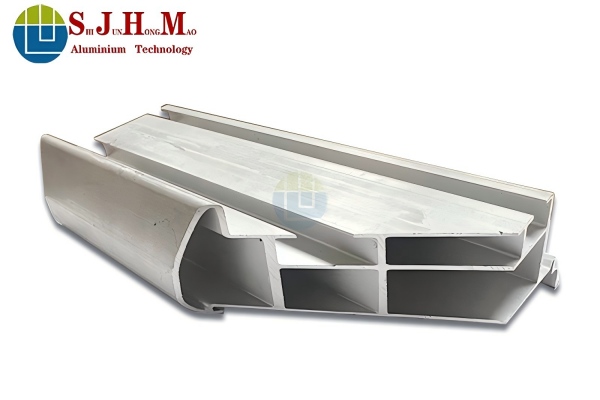
Aluminum extrusion is a manufacturing process where aluminum alloy is pushed through a die to create a specific cross-sectional profile. For automotive applications, this process enables the production of complex, lightweight, and high-strength components with consistent quality.
Common Automotive Applications of Aluminum Extrusion
Aluminum extrusions are widely used in:
- EV battery enclosures
- Crash management systems
- Roof rails and structural reinforcements
- Heat sinks and thermal management systems
- Chassis components
- Door frames and body structures
- Engine components and housings
Why Aluminum Extrusion Is Ideal for Automotive
- Lightweight: Reduces overall vehicle weight and improves fuel efficiency or EV range
- Corrosion-resistant: Ideal for harsh environments
- High strength-to-weight ratio
- Design flexibility: Complex geometries can be extruded in one piece
- Cost-efficient for mass production
Overview: 6061 vs 6063 Aluminum Extrusion
6061 and 6063 are both heat-treatable aluminum alloys from the 6000 series, but they differ significantly in composition, properties, and applications.
6061 Aluminum Extrusion
6061 is known for its high strength and structural performance.
Key Properties:
- High tensile strength
- Good machinability
- Excellent corrosion resistance
- Strong weldability
- Suitable for heat treatment (T6 commonly used)
Typical Applications:
- Automotive structural components
- Chassis parts
- Load-bearing frames
- Aerospace and heavy-duty industrial parts
- Mechanical and engineered components
👉 6061 is typically chosen when mechanical strength is a priority over surface finish.
6063 Aluminum Extrusion
6063 is often referred to as the architectural alloy, but it is also widely used in automotive and industrial applications where appearance and extrusion quality matter.
Key Properties:
- Excellent surface finish
- Superior extrudability
- Good corrosion resistance
- Moderate strength (lower than 6061)
- Ideal for anodizing
Typical Applications:
- Window and door frames
- Decorative trims
- Heat sinks
- Lightweight structural components
- Automotive interior/exterior profiles
👉 6063 is ideal when surface quality, formability, and aesthetics are more important than maximum strength.
6061 vs 6063 Aluminum Extrusion: Key Differences
| Feature | 6061 Aluminum | 6063 Aluminum |
|---|---|---|
| Strength | Higher | Moderate |
| Surface Finish | Good | Excellent |
| Extrudability | Moderate | Excellent |
| Machinability | Good | Good |
| Weldability | Excellent | Excellent |
| Applications | Structural, load-bearing | Architectural, aesthetic |
| Cost Efficiency | Slightly higher processing cost | More cost-effective for complex profiles |
Summary:
- Choose 6061 for strength-critical automotive components
- Choose 6063 for complex shapes, surface finish, and lightweight profiles
- Both alloys are widely used depending on engineering requirements
How to Choose Between 6061 and 6063 for Automotive Applications
Selecting the right alloy depends on multiple engineering and manufacturing factors:
1. Load and Strength Requirements
- High load-bearing parts → 6061
- Non-structural or semi-structural parts → 6063
2. Surface Finish Requirements
- Visible or anodized parts → 6063
- Hidden structural components → 6061
3. Complexity of Profile Design
- Complex, thin-walled profiles → 6063
- Simpler, high-strength profiles → 6061
4. Cost Considerations
- 6063 typically offers better extrusion efficiency
- 6061 may require additional machining or processing
5. Post-Processing Needs
- If extensive CNC machining is required → 6061 preferred
- If anodizing or decorative finishing is required → 6063 preferred
Role of a 6063 Aluminum Extrusion Supplier
Choosing the right 6063 aluminum extrusion supplier is critical for ensuring product quality, consistency, and cost efficiency.
What a Professional Supplier Should Offer
1. Design Support
- DFM (Design for Manufacturing) guidance
- Profile optimization to reduce cost and improve extrusion success
2. Tooling & Die Engineering
- Custom die design for complex profiles
- Simulation and testing to avoid defects
3. Production Capability
- Multiple extrusion press sizes
- Ability to handle large and complex profiles
4. Surface Treatment Services
- Anodizing
- Powder coating
- Polishing and brushing
5. Quality Control
- Dimensional inspection
- Mechanical testing
- Surface quality checks
6. Certifications
- ISO quality systems
- Automotive-grade manufacturing standards (if applicable)
Why Engineers Prefer Working with Experienced Aluminum Extrusion Manufacturers
For automotive and industrial projects, collaboration with an experienced aluminum extrusion manufacturer can significantly reduce risks.
Key Benefits:
- Early-stage design optimization
- Reduced tooling costs
- Faster development cycles
- Improved manufacturability
- Stable mass production quality
Manufacturers with engineering expertise can help identify potential issues such as:
- Uneven wall thickness
- Poor metal flow
- Die wear and failure risks
- Tolerance challenges
Common Challenges in Aluminum Extrusion for Automotive Parts
1. Profile Deformation
Caused by uneven cooling or improper die design.
2. Die Wear
Complex profiles increase stress on extrusion dies.
3. Tolerance Control
Automotive parts often require tight tolerances.
4. Surface Defects
Scratches, lines, or oxidation can affect product quality.
5. Material Selection Errors
Choosing the wrong alloy can impact performance and cost.
Best Practices for Automotive Aluminum Extrusion Design
- Maintain uniform wall thickness where possible
- Avoid sharp corners; use fillets and radii
- Design with extrusion direction in mind
- Consider downstream machining requirements
- Work closely with your aluminum extrusion supplier early in the design phase
Future Trends in Aluminum Extrusion for Automotive Industry
- Increased adoption in electric vehicles (EVs)
- Growth in battery enclosure extrusion systems
- Demand for lightweight crash-resistant structures
- Integration of multi-material designs
- Increased automation in extrusion and finishing processes
Frequently Asked Questions (FAQ)
1. What is the main difference between 6061 and 6063 aluminum?
6061 offers higher strength, while 6063 provides better surface finish and extrudability.
2. Which alloy is better for automotive structural parts?
6061 is generally preferred for load-bearing and structural automotive components.
3. Is 6063 suitable for automotive applications?
Yes, especially for non-structural parts, trims, and lightweight profiles.
4. How do I choose a reliable 6063 aluminum extrusion supplier?
Look for experience, engineering support, production capacity, quality certifications, and surface finishing capabilities.
5. Can both alloys be anodized?
Yes, both 6061 and 6063 can be anodized, but 6063 typically provides a more uniform and aesthetically pleasing finish.
Aluminum extrusion plays a vital role in automotive manufacturing, offering a balance of strength, weight reduction, and design flexibility. Understanding the differences between 6061 vs 6063 aluminum extrusion is essential for selecting the right material for your application.
- Choose 6061 for high-strength automotive structural components
- Choose 6063 for surface quality, complex profiles, and architectural-like automotive parts
- Partner with a reliable 6063 aluminum extrusion supplier to ensure quality, efficiency, and successful project execution
By aligning material selection with design requirements and working closely with an experienced aluminum extrusion manufacturer, engineers and procurement teams can achieve optimal performance, cost efficiency, and long-term reliability.
As a professional aluminum extrusion manufacturer, we provide custom aluminum extrusion solutions.
Learn More:https://www.sjhmalu.com/product