
Aluminum Profile Water-Cooled Electric Motor Housings: Why Our Manufacturer Expertise Delivers Unmatched Cooling for EVs, Industry & More?
- By:SJHM
- Date:16-07-2025
In the world of industrial and automotive machinery, electric motors are the backbone of operation
—powering everything from conveyor belts to electric vehicles (EVs). But as motors grow more powerful and operate in demanding environments, traditional cooling methods like air cooling often fall short. Enter the water-cooled electric motor housing: a cutting-edge solution designed to tackle overheating challenges head-on. In this guide, we’ll explore what water-cooled motor housings are, how they work, their technical advantages, and why they’re becoming the go-to choice for high-performance applications.
Water-cooled Electric Motor Housing
What Exactly is a Water-Cooled Electric Motor Housing?
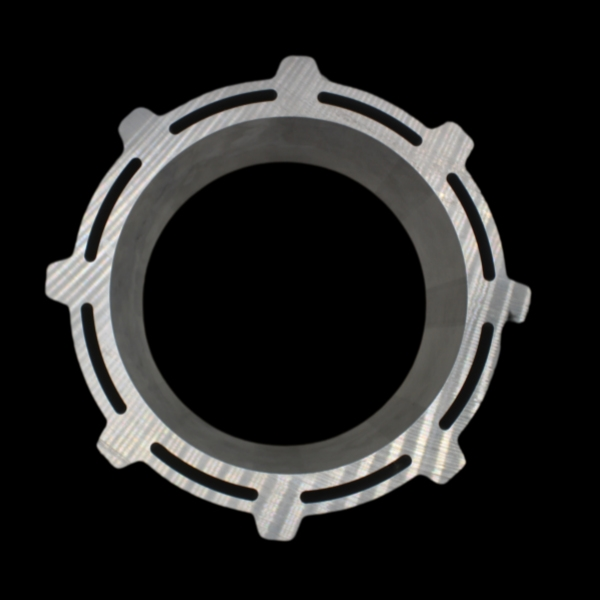
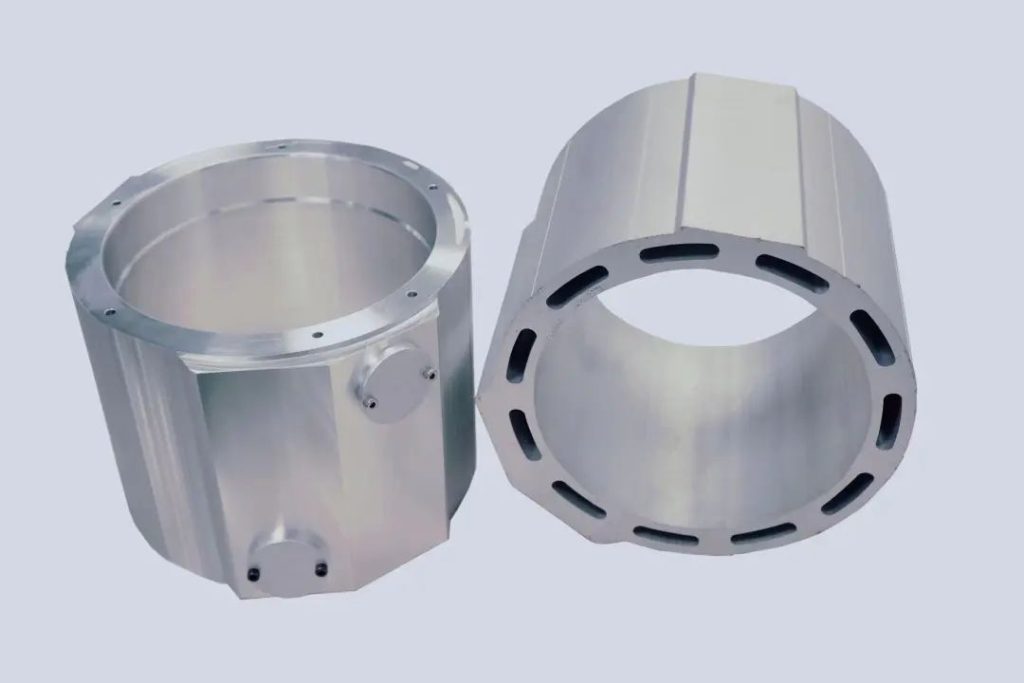
A water-cooled electric motor housing is an external protective structure engineered to regulate motor temperature through liquid-based heat dissipation. Unlike passive air cooling (which relies on ambient airflow) or active air cooling (using fans), water-cooled systems circulate a coolant (typically water mixed with antifreeze or specialized fluids) through integrated channels within the housing. This coolant absorbs heat generated by the motor’s stator, rotor, and windings, then transfers it to a external cooling system (like a radiator or heat exchanger) for dissipation.
The result? Lower operating temperatures, even under heavy loads or prolonged use, which translates to:
1. Extended motor lifespan (reduced thermal stress on components).
2. Consistent performance (no performance throttling due to overheating).
3. Compact design (since water cooling is more efficient than air cooling, housings can be smaller).
Water-cooled Electric Motor Housing
Why Choose Water Cooling Over Air Cooling?
To understand the value of water-cooled motor housings, it’s helpful to compare them to traditional air-cooled systems:
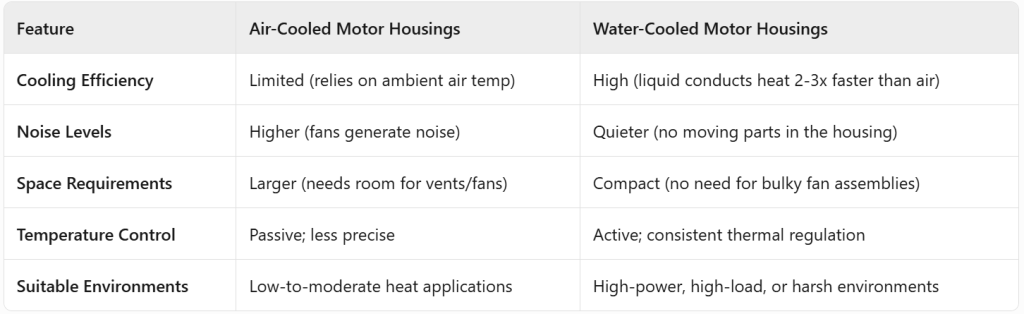
For industries like electric vehicles, industrial automation, and renewable energy, where motors operate at 80%+ duty cycles, water cooling is often the only viable solution to prevent overheating and premature failure.
Water-cooled Electric Motor Housing
How Do Water-Cooled Motor Housings Work?
At their core, water-cooled motor housings leverage a closed-loop cooling system. Here’s a step-by-step breakdown of the process:
1. Heat Generation: As the motor runs, electrical energy is converted to mechanical energy—and excess energy is released as heat (via Joule heating in windings and friction in bearings).
2. Heat Absorption: The motor’s outer casing (integrated with the water-cooled housing) conducts this heat into the housing’s internal coolant channels.
3. Coolant Circulation: A pump drives the coolant (e.g., deionized water with corrosion inhibitors) through these channels, absorbing heat from the housing.
4. Heat Dissipation: The heated coolant flows to an external radiator or heat exchanger, where a fan or secondary cooling loop (e.g., in EVs, using the vehicle’s main radiator) cools it down.
5. Recirculation: The cooled coolant returns to the housing, repeating the cycle.
This continuous loop ensures that motor temperatures remain within safe operating limits, even under extreme conditions.
Aluminum housing,manufacturer of aluminum extrusion motor housing,Water-cooled Electric Motor Housing
Technical Manufacturing Processes of Water-Cooled Motor Housings
Creating a reliable water-cooled motor housing requires precision engineering across multiple stages. Let’s dive into the key steps that set high-quality housings apart:
1. Material Selection: Balancing Conductivity, Durability, and Weight
The choice of material directly impacts thermal performance, corrosion resistance, and structural integrity. Most water-cooled housings use aluminum alloys—and for good reason:
Thermal Conductivity: Aluminum has excellent thermal conductivity (≈205 W/m·K), making it ideal for transferring heat from the motor to the coolant.
Lightweight: Aluminum is 30% lighter than steel, reducing overall system weight—a critical factor for EVs and aerospace applications.
Corrosion Resistance: Aluminum naturally forms a protective oxide layer, and surface treatments (e.g., anodizing) enhance this resistance, extending the housing’s lifespan.
Some manufacturers also use copper for high-performance applications, though its higher cost and weight make it less common. Aluminum remains the top choice for most industrial and automotive use cases.
Water-cooled Electric Motor Housing
2. Cooling Channel Design: Precision for Maximum Heat Transfer
The cooling channels are the “heart” of the water-cooled housing. Their design directly determines how efficiently heat is absorbed and dissipated. Key considerations include:
Channel Geometry: Channels are typically rectangular or circular, with narrow widths (2-5mm) to maximize surface area-to-volume ratio. This increases contact between the coolant and housing, boosting heat transfer.
Flow Distribution: Engineers use computational fluid dynamics (CFD) simulations to ensure even coolant flow, preventing “hot spots” where coolant might stagnate.
Integration with Motor Components: Channels are strategically placed near high-heat areas (e.g., stator slots, bearing housings) to target heat absorption where it’s most needed.
Modern manufacturers use CNC machining and 3D printing to create complex channel geometries that would be impossible with traditional methods. For example, some designs feature serpentine channels or microchannels to further enhance cooling efficiency.
Water-cooled Electric Motor Housing
3. Surface Treatment: Enhancing Durability and Efficiency
Post-machining, the housing undergoes surface treatments to improve corrosion resistance, aesthetics, and even thermal performance:
Anodizing: An electrolytic process that thickens the aluminum’s natural oxide layer, creating a hard, scratch-resistant surface. Anodized housings also retain heat better, improving overall cooling efficiency.
Powder Coating: A durable, decorative finish applied via electrostatic spraying. Powder-coated housings resist UV rays, chemicals, and abrasion, making them ideal for outdoor applications (e.g., wind turbines).
Chemical Conversion Coatings: Treatments like chromate conversion create a thin, protective layer that inhibits corrosion at the metal-coolant interface.
These treatments not only extend the housing’s lifespan but also ensure compatibility with different coolants (e.g., glycol-based fluids, deionized water).
Water-cooled Electric Motor Housing
4. Precision Machining and Quality Control
Tolerances in water-cooled housings are critical—misaligned channels or loose fits can lead to coolant leaks or reduced heat transfer. To achieve this:
CNC Machining: Computer-controlled lathes and mills ensure precise cutting, drilling, and tapping of aluminum plates. This is especially important for mounting holes, coolant inlets/outlets, and sensor ports.
Friction Stir Welding (FSW): As mentioned earlier, FSW creates seamless joints with minimal distortion, critical for maintaining the housing’s structural integrity.
Non-Destructive Testing (NDT): Techniques like X-ray inspection are used to detect internal flaws (e.g., cracks, voids) that could compromise the housing’s performance.
Water-cooled Electric Motor Housing
Applications of Water-Cooled Electric Motor Housings
Water-cooled motor housings are indispensable in industries where motors face extreme heat, high power demands, or space constraints. Here are some key use cases:
1. Electric Vehicles (EVs) and Hybrid Drivetrains
EV motors operate at high RPMs (up to 20,000 RPM in some performance models) and generate significant heat—especially during acceleration or hill climbing. Water-cooled housings keep motor temperatures stable, enabling:
Faster charging (reduced thermal stress on battery systems).
Extended range (more efficient motor operation).
High torque output (consistent performance in stop-and-go traffic).
Major automakers like Tesla and BMW use water-cooled motor housings in their electric powertrains, where space and weight savings are critical.
2. Industrial Automation and Robotics
Industrial robots and CNC machines require motors to run continuously for 24/7 operations. Overheating can lead to:
Reduced precision (thermal expansion distorts motor components).
Downtime (costly repairs and lost production).
Water-cooled housings maintain stable temperatures, ensuring:
High repeatability (critical for assembly line precision).
Longer motor life (reduced maintenance intervals).
For example, in automotive assembly plants, water-cooled motors power robotic arms that weld and paint vehicles—tasks that demand consistent, reliable performance.
3. Wind Turbines
Wind turbine generators operate in harsh environments (extreme temperatures, salt spray, and vibration) and must handle variable loads. Water-cooled housings:
Dissipate heat from high-power generators (often rated at 3-10 MW).
Protect against corrosion (with aluminum alloys and specialized coatings).
Reduce maintenance needs (sealed systems prevent debris ingress).
Offshore wind farms, in particular, rely on water cooling to ensure generators remain operational in salty, humid conditions.
4. High-Power Servo Systems
Servo motors are the “muscles” of CNC machines, 3D printers, and precision robotics. They require rapid acceleration/deceleration, which generates heat. Water cooling enables:
Faster response times (critical for high-speed machining).
Reduced thermal distortion (ensuring positional accuracy).
In semiconductor manufacturing, where precision is measured in microns, water-cooled servo systems are a must.
5. Marine Propulsion Systems
Marine motors face unique challenges: high humidity, saltwater exposure, and continuous operation. Water-cooled housings:
Withstand salt corrosion (aluminum alloys and anodizing provide protection).
Maintain performance in warm tropical waters (where ambient temperatures are already high).
Naval vessels, ferries, and cargo ships all use water-cooled motor housings to ensure reliable propulsion.
Water-cooled Electric Motor Housing
Why Shijun Hongmao Aluminum Leads in Water-Cooled Motor Housings
When selecting a water-cooled motor housing, partnering with a trusted manufacturer is critical. Shijun Hongmao Aluminum stands out for several reasons:
Expertise in Custom Solutions: Whether you need a housing for a small EV motor or a large industrial generator, Shijun Hongmao Aluminum designs custom solutions tailored to your specifications.
Advanced Manufacturing Facilities: Equipped with state-of-the-art CNC machines, they deliver precision-engineered housings with tight tolerances.
Material Excellence: They source high-grade aluminum alloys (e.g., 6061-T6/6063-T5) known for their thermal conductivity, strength, and corrosion resistance.
Compliance with International Standards: All housings meet ISO 9001.
Conclusion
Water-cooled electric motor housings are revolutionizing thermal management in high-performance applications, offering superior cooling efficiency, compact design, and reliability. By understanding their design, manufacturing processes, and applications, industries can make informed decisions to optimize motor performance and longevity.
For businesses seeking a trusted partner in water-cooled motor housing manufacturer, Shijun Hongmao Aluminum combines cutting-edge technology, material expertise, and a commitment to quality—ensuring your motors stay cool, even under the toughest conditions.
Ready to upgrade your motor’s cooling system? Contact Shijun Hongmao Aluminum today to learn more about our custom water-cooled motor housing solutions.
Learn More:http://www.sjhmalu.com
Follow us: https://youtube.com/shorts/uVr871m8Ik8?si=iUXRJGtwOKw8du70