
2024 Aluminum Extrusion: The Cornerstone of High-Performance Aerospace Engineering
- By:SJHM
- Date:19-08-2025
In the demanding world of aerospace engineering, material selection is a critical determinant of safety, efficiency, and performance. Among the array of advanced alloys, 2024 aluminum extrusion stands out as a versatile, high-strength solution that has powered iconic aircraft designs for decades. From fuselage frames to wing spars, this alloy’s unique combination of mechanical properties, processability, and fatigue resistance makes it indispensable for modern aviation. In this comprehensive guide, we explore why 2024 aluminum extrusion is a top choice for aerospace manufacturers, its technical specifications, and its transformative role in shaping the future of air travel.
What Makes 2024 Aluminum Extrusion a Aerospace Superstar?
Aerospace components face extreme stressors: cyclic loading during takeoff/landing, corrosion from atmospheric exposure, and the need to balance weight with structural integrity. 2024 aluminum extrusion is engineered to thrive under these conditions, thanks to three core attributes:
1. Exceptional Strength-to-Weight Ratio
2024 aluminum extrusion is a heat-treatable alloy, meaning its mechanical properties are enhanced through processes like solution heat treatment and aging. This results in a tensile strength of up to 480 MPa (depending on temper) and a yield strength of 450 MPa—far exceeding conventional aluminum alloys. Critically, its density remains low (2.78 g/cm³), allowing engineers to design lighter components without sacrificing load-bearing capacity. For example, a 2024 aluminum wing spar can support the same weight as a steel component but at just 30% of the mass, directly improving fuel efficiency and payload capacity.
2. Superior Fatigue Resistance
Aircraft components endure millions of stress cycles over their service life—from wing flaps moving up and down to landing gear deploying repeatedly. 2024 aluminum extrusion excels here, with an elongation (ductility) of 19–20% in common tempers (T4, T351, T851). This ductility absorbs energy during cyclic loading, delaying the onset of cracks. Studies show that 2024 alloy retains 80% of its original strength after 10⁷ fatigue cycles, making it ideal for wings, fuselage frames, and other high-stress areas.
3. Design Flexibility via Hot Extrusion
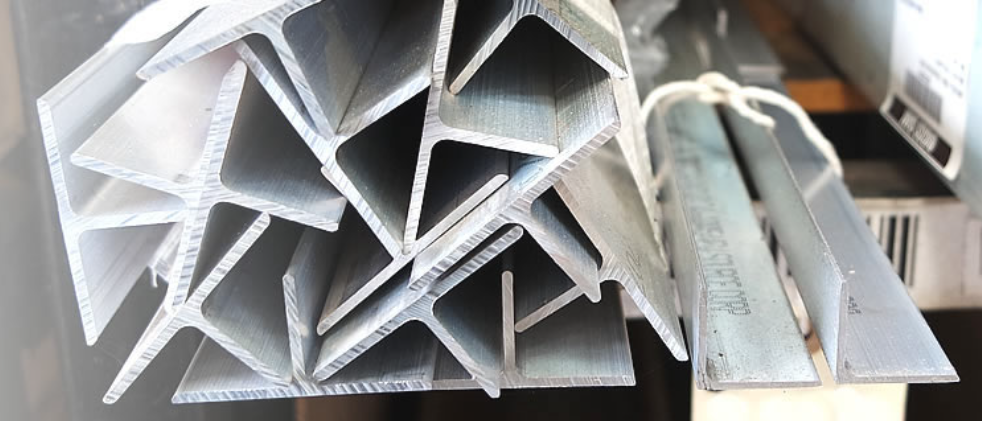
Unlike machined or forged components, 2024 aluminum extrusion is produced by forcing heated alloy billets through a die, creating complex cross-sectional profiles in a single step. This process enables the manufacture of intricate shapes—think oval tubes, T-bars, and U-channels—that would be cost-prohibitive or impossible to produce via other methods. For aerospace designers, this flexibility translates to optimized weight distribution, reduced part counts, and improved aerodynamics.
Technical Deep Dive: Specifications, Chemistry, and Performance
To ensure reliability in critical applications, 2024 aluminum extrusion adheres to strict international standards and undergoes rigorous testing.
Certifications and Compliance
Chemical Composition: Balancing Strength and Workability
The alloy’s power lies in its precise chemical makeup (see table below). Key elements include:
| Chemical Element | Percentage (%) | Role in Performance |
|---|---|---|
| Copper (Cu) | 3.8–4.9 | Forms precipitates (θ’ phase) during aging, boosting strength. |
| Magnesium (Mg) | 1.20–1.8 | Enhances corrosion resistance and strengthens the alloy matrix. |
| Manganese (Mn) | 0.3–0.9 | Refines grain structure, improving ductility and fatigue life. |
| Silicon (Si) | ≤0.5 | Reduces melting point, aiding extrusion processability. |
Aluminum (Al) makes up the balance (~90%), providing a lightweight base. Notably, trace elements (Cr, Ti, Zn) are tightly controlled to prevent brittleness or intergranular corrosion.
Mechanical Properties by Temper
The “temper” of 2024 aluminum extrusion—denoted by suffixes like T4, T351, or T851—dictates its final properties. Here’s how common tempers compare:
| Temper | Tensile Strength (MPa) | Yield Strength (MPa) | Elongation (%) | Best For |
|---|---|---|---|---|
| T4 | 460 | 220 | 19 | General structural use; balanced strength and formability. |
| T351 | 460 | 260 | 19 | Machined components; higher yield strength for load-bearing parts. |
| T851 | 480 | 450 | 20 | High-stress applications (e.g., landing gear); maximum strength after artificial aging. |
Manufacturers select tempers based on the application’s stress profile—for instance, T851 is preferred for landing gear due to its superior yield strength, while T351 is ideal for machined brackets requiring precise dimensions.
From Factory to Flight: 2024 Aluminum Extrusion in Action
2024 aluminum extrusion’s versatility shines across nearly every aircraft system. Let’s examine its role in four critical aerospace applications:
1. Fuselage Structures: The “Bones” of the Aircraft
The fuselage—the main body of an airplane—must withstand immense pressure (up to 8 psi at cruising altitude) while remaining as light as possible. 2024 aluminum extrusion is used to fabricate:
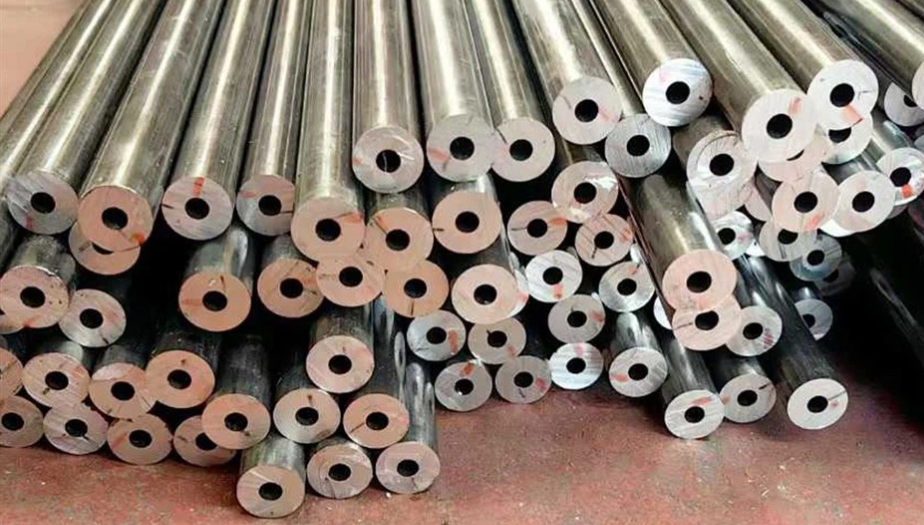
- Longitudinal Beams and Cross Braces: These primary load-bearing members form the fuselage’s skeleton. Their complex, hollow profiles (often oval or rectangular tubes) reduce weight without compromising rigidity.
- Skin Panels: Thin, extruded sheets of 2024 aluminum are stretched over the fuselage frame. Their high strength allows for thin gauges (1–3 mm thick), minimizing overall weight while resisting buckling under internal pressure.
Case Study: Modern narrow-body airliners use 2024 extrusions for 70% of fuselage components, contributing to a 20% reduction in empty weight compared to older models.
2. Wing Design: Balancing Lift and Stress
Wings are subjected to torsional forces (twisting) during turns, bending stresses during turbulence, and fatigue from repeated flapping. 2024 aluminum extrusion addresses these challenges through:
- Main Spars and Stringers: The main spar, the wing’s central “backbone,” is often extruded into a T-shaped or I-shaped profile to maximize load distribution. Stringers (vertical supports under the wing skin) use 2024 oval tubes to resist buckling while adding minimal weight.
- Ailerons and Flaps: These movable components require fatigue-resistant materials. 2024 extrusions, with their superior elongation, withstand millions of cycles without cracking, ensuring safe operation over decades.
Industry Trend: Electric vertical takeoff and landing (eVTOL) aircraft—set to revolutionize urban mobility—are increasingly adopting 2024 extrusions for wing frames, where light weight and high strength are critical for efficient hovering and cruising.
3. Moving Parts: Cargo Doors, Elevators, and Beyond
Aircraft components that open/close frequently (e.g., cargo doors, tail elevators) face cyclic stress and exposure to harsh environments. 2024 aluminum extrusion excels here due to:
- Fatigue Resistance: Even after 1 million open/close cycles, 2024 extrusions retain 90% of their original strength, reducing maintenance costs.
- Corrosion Mitigation: While 2024 has moderate natural corrosion resistance, anodizing (a process that thickens the protective oxide layer) can extend service life by 3–5 times. This is critical for cargo doors, which face salt spray, UV radiation, and debris.
Example: A major cargo airline uses 2024 T851 extrusions for its main deck doors, reporting a 40% reduction in repair incidents over 5 years compared to previous steel-based designs.
4. Landing Gear: The First Line of Defense
Landing gear must absorb enormous impact forces (up to 3x the aircraft’s weight) during touchdown while supporting heavy loads during taxiing. 2024 aluminum extrusion is used in:
- Main Struts: These cylindrical components (often hollow 2024 rectangular tubes) compress to absorb energy during landing, then rebound for takeoff. Their high yield strength prevents permanent deformation.
- Brackets and Mounts: Smaller extruded parts (e.g., T-bars, angle brackets) secure landing gear to the fuselage. Their precise dimensions and machinability ensure tight tolerances, critical for alignment.
Why Choose 2024 Aluminum Extrusion Over Alternatives?
While other alloys (e.g., 7075, 6061) are used in aerospace, 2024 extrusion offers unique advantages:
- vs. 7075 Aluminum: 7075 has higher tensile strength (572 MPa) but lower fatigue resistance. It is also more prone to stress corrosion cracking, making it less suitable for dynamically loaded components like wings.
- vs. 6061 Aluminum: 6061 is highly weldable and corrosion-resistant but has lower strength (310 MPa tensile). It is better suited for non-critical parts (e.g., ducting) rather than primary structures.
- vs. Composite Materials: Carbon fiber composites offer exceptional strength-to-weight ratios but are expensive and difficult to repair. 2024 extrusions provide a cost-effective, repairable alternative for secondary structures, balancing performance and affordability.
Optimizing 2024 Aluminum Extrusion for Your Aerospace Project
When selecting 2024 aluminum extrusion for your application, consider these best practices:
- Temper Selection: Match the temper to the stress profile. Use T851 for high-load parts (landing gear) and T351 for machined components.
- Coatings: Apply anodizing (Type II or III) for corrosion-prone areas (cargo doors, wing edges). For extreme environments, consider primer coatings or electroplating.
- Supplier Qualification: Partner with suppliers certified to AMS, ASTM, or ISO 9001 standards to ensure consistent quality. Look for providers that offer custom extrusion profiles to reduce part counts.
- Design for Manufacturability: Simplify profiles where possible to lower extrusion costs. Hollow sections (tubes, channels) are often more cost-effective than solid bars for non-critical load paths.
The Future of 2024 Aluminum Extrusion in Aerospace
As aviation evolves—toward electric propulsion, supersonic travel, and increased automation—2024 aluminum extrusion is poised to remain a cornerstone material.
Conclusion
2024 aluminum extrusion is more than just a material—it’s a critical enabler of modern aviation. Its unmatched combination of strength, light weight, and fatigue resistance has powered everything from commercial airliners to military jets, and its role will only grow as the industry pushes the boundaries of innovation. Whether you’re designing a new aircraft or upgrading existing components, 2024 aluminum extrusion delivers the performance and reliability needed to meet the rigorous demands of aerospace engineering.
By understanding its technical properties, applications, and optimization strategies, you can leverage 2024 aluminum extrusion to create safer, more efficient, and future-ready aircraft.
Learn more :http://www.sjhmalu.com
Follow us https://www.youtube.com/@ShijunHongmaoAluminum/shorts
aluminium and aluminium,aluminum manufacturers,aluminum fabrication,aluminum company
product manufacturing,aluminium al 6061,aluminum alloy 6063,2024aluminum ,aluminum alloy,aluminum profiles