
Aluminum Heatsink for Electrical Cabinet – Material 6063 vs 6061
- By:SJHM
- Date:16-10-2025
aluminum heatsink for electrical cabinet
In the heart of every modern factory, power plant, and data center lies the nerve center: the electrical control cabinet. Within these enclosures, critical components like Programmable Logic Controllers (PLCs), Variable Frequency Drives (VFDs), and servo drives work tirelessly to ensure precision and efficiency. However, this operation comes with a constant byproduct: heat. Excessive heat is the primary enemy of electronic components, leading to performance throttling, accelerated aging, and ultimately, system failure. Studies consistently show that for every 10°C increase in operating temperature beyond its rating, an electronic component’s lifespan can be halved.
aluminum heatsink for electrical cabinet
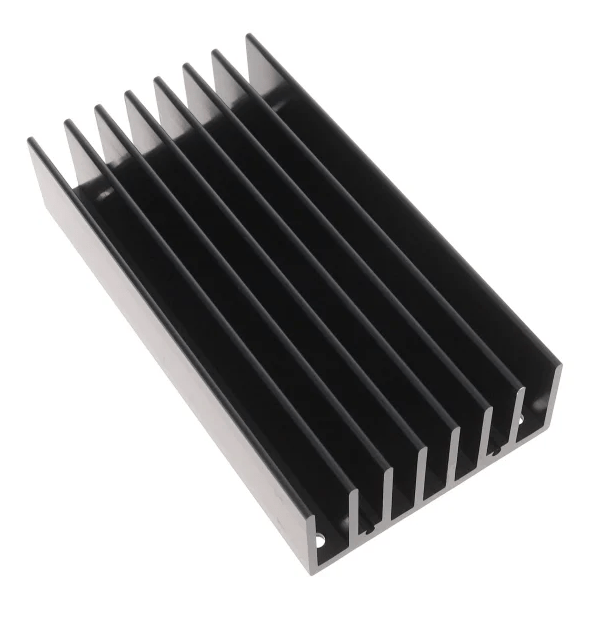
The aluminum heat sink. More than just a piece of metal, it is a precision-engineered thermal management device that acts as the lifeblood of your control system. At Shijun Hongmao Aluminum, with over 19 years of experience as a specialized industrial aluminum profile manufacturer, we understand that selecting the right heat sink is not an afterthought—it’s a critical design decision. This comprehensive guide will delve into the science, materials, and design behind aluminum heat sinks, empowering you to make informed choices that ensure the longevity and reliability of your electrical systems.
aluminum heatsink for electrical cabinet
Aluminum has become the undisputed champion of heat sink materials for several compelling reasons that combine performance with practicality.
Excellent Thermal Conductivity: Aluminum alloys commonly used for heat sinks, such as the 6000 series, possess a thermal conductivity ranging from 170 to 220 W/(m·K). This means heat generated by a component like an IGBT module in a VFD is rapidly conducted away from the source and distributed throughout the entire heat sink structure. Compared to alternative materials like steel (approx. 50 W/(m·K)) or plastics (often <1 W/(m·K)), aluminum’s advantage is overwhelming.
Lightweight: With a density of approximately 2.7 g/cm³, aluminum is remarkably light. This reduces the overall weight burden on the control cabinet and its support structures, simplifying installation and logistics.
Superior Machinability and Formability: Aluminum’s most significant advantage for heat sinks is its suitability for extrusion. This process allows us to create complex profiles with intricate, high-aspect-ratio fins in a single, continuous operation. This enables the design of heat sinks with a massive surface area within a compact volume, which is the key to efficient dissipation.
Strong Corrosion Resistance: Aluminum naturally forms a protective oxide layer. This inherent resistance can be dramatically enhanced through anodizing, a controlled electrochemical process that thickens the oxide layer. Anodizing not only improves corrosion resistance but also increases surface hardness and wear resistance. Furthermore, black anodizing improves the heat sink’s emissivity, enhancing its ability to radiate heat away.
High Cost-Effectiveness: Aluminum is the most abundant metal in the Earth’s crust. Coupled with the highly efficient extrusion process, this results in an exceptional price-to-performance ratio, making advanced thermal management solutions affordable for a wide range of applications.
The choice of aluminum alloy is paramount. While there are many options, the debate almost always centers on two premier grades: 6063 and 6061.
aluminum heatsink for electrical cabinet
Summary Comparison Table:
| Feature | 6063 Aluminum Alloy (The Preferred Choice for Heat Sinks) | 6061 Aluminum Alloy |
| Thermal Conductivity | Excellent (Approx. 200-220 W/(m·K)) | Good (Approx. 170-200 W/(m·K)) |
| Extrudability | Superior. Excellent flow characteristics, allowing for thin, complex fins and intricate shapes. | Good, but requires more pressure than 6063. Limited in creating very thin fins. |
| Mechanical Strength | Good for most heat sink applications. | Higher. Better mechanical properties (tensile and yield strength). |
| Surface Finish (Anodizing) | Exceptional. Produces a high-quality, uniform, and aesthetic finish. | Good, but may not be as uniform as 6063 on complex shapes. |
| Primary Applications | Ideal for most profile heat sinks where thermal performance is the top priority. (e.g., for PLCs, VFDs, Power Supplies). | Suitable for heat sinks that require additional structural support or will undergo significant CNC machining. |
| Cost-Effectiveness | Generally more cost-effective for extrusion-intensive designs. | Slightly higher due to alloying elements and processing. |
aluminum heatsink for electrical cabinet
In-Depth Analysis:
6063 Aluminum: The Heat Dissipation Specialist
Think of 6063 as the specialist engineered for thermal performance. Its chemical composition is tailored for the extrusion process. Its excellent “extrudability” means it can be pushed through intricate dies to create fins that are both tall and thin, maximizing the surface area for a given footprint. This makes it the unequivocal first choice for the vast majority of electrical cabinet heat sinks where the primary goal is efficient cooling. If your design prioritizes dissipating the most watts in the smallest space, 6063 is almost always the correct answer.
aluminum heatsink for electrical cabinet
6061 Aluminum: The Strong All-Rounder
6061 is a robust, high-strength alloy. It contains more magnesium and silicon, which gives it superior mechanical properties. This makes it suitable for applications where the heat sink serves a dual purpose—not only dissipating heat but also acting as a sturdy mounting bracket or chassis component that must withstand higher stresses or vibrations. The trade-off is a slightly lower thermal conductivity and a greater challenge in extruding very fine fin geometries. Choose 6061 when structural integrity is a co-primary requirement alongside heat dissipation.
aluminum heatsink for electrical cabinet
Selecting the right material is only half the battle. The design of the heat sink is equally critical.
Thermal Resistance – Rθ: This is the most critical metric. Expressed in °C/W, it represents the resistance to heat flow from the component to the air. A lower value means better performance. The total system thermal resistance must be low enough to keep the electronic component’s junction temperature within its safe operating limit.
Fin Design: The geometry of the fins dictates the surface area and airflow.
Natural Convection: Relies on buoyancy-driven air movement. Fins should be wider and spaced further apart to allow air to easily flow between them.
Forced Convection: Uses a fan. Fins can be denser and taller to create a large surface area, as the fan provides the necessary pressure to push air through the tighter channels.
Base Thickness: A thicker base helps “spread” the heat from the concentrated source (e.g., a semiconductor) laterally, preventing “hot spots” and ensuring all fins are utilized effectively.
Interface Materials: The microscopic gaps between the component and the heat sink base create a significant thermal barrier. Using a thermal interface material (TIM) like thermal grease or a gap pad is essential to fill these air gaps and dramatically reduce contact resistance.
aluminum heatsink for electrical cabinet
At ShiJun Hongmao Aluminum, we turn raw aluminum into high-performance thermal solutions through a meticulous, quality-controlled process.
Die Design and Manufacturing: It all starts with a precision-made, hardened steel die. Our engineers use CAD software to design the die cavity, which is the inverse of the desired heat sink profile.
Billet Heating and Extrusion: An aluminum cylindrical billet is heated to approximately 400-500°C. It is then pushed through the die using a massive hydraulic ram. The soft aluminum flows through the die opening, emerging as a continuous profile with the exact shape of the heat sink.
Quenching and Stretching: The profile is rapidly cooled (quenched) using air or water to set its mechanical properties. It is then stretched to straighten it and relieve internal stresses.
Cutting to Length and Aging: The long profile is cut to the required lengths. These “saw lengths” are then placed in an aging oven (a process called precipitation hardening) to achieve the final desired temper (T5 or T6), which defines the alloy’s strength.
Secondary Processing and Surface Treatment: The heat sinks undergo CNC machining for drilling, tapping, or milling to meet precise dimensional requirements. Finally, they are anodized to enhance durability and corrosion resistance.
aluminum heatsink for electrical cabinet
Q&A
Q1: Can you create a completely custom heat sink design?
A: Absolutely. Custom extrusion is our specialty. We work with you from the CAD design phase to create a bespoke solution optimized for your specific component, space constraints, and thermal requirements.
Q2: How do I calculate the required size of a heat sink for my application?
A: This requires knowing the component’s power dissipation (in Watts) and its maximum allowable junction temperature. Our technical team can assist you with this calculation. We often use advanced thermal simulation software to model performance before manufacturing.
Q3: What information should I provide when requesting a quote?
A: To get you an accurate quote quickly, please provide:
CAD drawings or detailed sketches of the desired profile.
Annual usage volume.
Alloy preference (e.g., 6063-T5).
Surface finish requirements (e.g., clear anodized).
aluminum heatsink for electrical cabinet
In the demanding world of industrial electronics, effective thermal management is not optional. The choice of an aluminum heat sink—from the alloy selection to the fin design—directly impacts the performance, reliability, and lifespan of your valuable control systems.
Partnering with an experienced aluminum profile manufacturer like ShiJun Hongmao Aluminum ensures you get more than just a piece of metal. You get a engineered solution backed by expertise in material science, precision extrusion, and thermal design.
Ready to solve your thermal challenges? Contact our engineering team today for a free consultation. We provide custom design support, rapid prototyping, and competitive pricing for projects of all sizes. Request your free quote and sample now!
Learn more :http://www.sjhmalu.com