
What Makes Aluminum Alloy Motor Housing a Change? A Deep Dive into Material Properties and Industrial Applications
- By:SJHM
- Date:12-08-2025
Against the global industrial shift toward high efficiency, lightweighting, and sustainability, upgrading motor performance—often called the “industrial heart”—has become a critical breakthrough. As a core component of motors, the material selection and structural design of motor housings directly impact heat dissipation efficiency, mechanical strength, service life, and overall energy performance. In recent years, aluminum alloy has emerged as the mainstream material for motor housings due to its superior comprehensive performance, driving technological innovation in the motor industry, particularly in new energy vehicles (NEVs), industrial automation, and high-end equipment. This article systematically analyzes the technical value and market prospects of aluminum alloy motor housing from multiple dimensions: material properties, application scenarios, manufacturing processes, industry trends, and services from leading suppliers.
Aluminum alloy motor housing
1. Aluminum Alloy Material: The “Ideal Choice” for Motor Housings
The core requirements for motor housings—”lightweighting, high strength, high thermal conductivity, easy processing, and long service life”—align closely with aluminum alloy’s characteristics. Its advantages are reflected in the following key aspects:
1.1 Lightweighting: The “Invisible Engine” for Reducing Energy Consumption
Aluminum alloy has a density of approximately 2.7g/cm³—only 1/3 that of cast iron (7.8g/cm³) and 1/2.9 that of stainless steel (7.9g/cm³). For motors, reducing housing weight directly lowers the rotational inertia of the entire unit, cutting drive energy consumption. In NEV drive motors, adopting aluminum alloy housings reduces single-unit motor weight by 15%-20%, and combined with vehicle lightweighting design, extends driving range by 5%-8%. This advantage is critical under the “dual carbon” goal: the International Energy Agency reports that transportation accounts for over 24% of global carbon emissions, making motor lightweighting a key path to emission reduction.
1.2 High Ductility and Easy Processability: The “Shaper” of Complex Structures
Aluminum alloys (e.g., 6061, 6063 series) exhibit excellent plasticity and ductility, with elongation rates of 15%-25% (vs. 8%-12% for ordinary steel). Combined with extrusion technology, they enable integrated forming of complex cross-sections. Motor housings often require structures like heat sinks, mounting holes, and sealing grooves. Aluminum alloy extrusion eliminates the need for welding or splicing, producing high-precision, high-strength components in one step—significantly reducing assembly errors and manufacturing costs. Compared to traditional cast iron casting + machining, extrusion-based production of housings with spiral heat sinks boosts efficiency by 40% and reduces oil leakage risk by 90%.
1.3 Thermal Conductivity and Heat Dissipation: The “Temperature Manager” for Motor Operation
Motor efficiency is closely tied to temperature rise—every 10°C increase shortens insulation material life by ~50% and reduces efficiency by 2%-3%. With a thermal conductivity of ~200W/(m·K) (vs. 45W/(m·K) for cast iron and <0.5W/(m·K) for plastics), aluminum alloy rapidly conducts heat from motor operations to the housing surface, dissipating it via air convection or water cooling. For high-power-density motors (e.g., NEV drive motors with power density >5kW/kg), the industry has developed “aluminum alloy water-cooled housings”: microchannels are machined into extruded housings to allow direct contact between coolant and heat sources. Combined with aluminum’s high thermal conductivity, this reduces motor temperature rise rates by 30%-50%, ensuring stable operation under extreme conditions.
1.4 Strength and Corrosion Resistance: The “Protective Shield” for Full Lifecycle Performance
Through heat treatment (e.g., 6061-T6), aluminum alloy achieves tensile strength ≥276MPa—approaching that of ordinary steel (Q235 steel has ~375MPa)—fully meeting the load-bearing and impact resistance needs of motor housings. Additionally, aluminum alloy forms a dense oxide film on its surface, offering far superior corrosion resistance compared to cast iron (prone to rust) and plain steel (requiring additional coatings). In harsh environments (e.g., marine motors, mining machinery motors), aluminum alloy housings last 3-5 times longer than cast iron ones.
1.5 Surface Treatment Diversity: The “Fusion Agent” of Aesthetics and Functionality
Beyond functionality, modern industrial design demands greater aesthetic appeal for motor housings. Aluminum alloy can achieve diverse surface effects through anodizing, electrophoretic painting, fluorocarbon spraying, and electroplating:
- Anodizing: Produces matte, high-gloss, or colored (red, blue, black) finishes.
- Electrophoretic painting: Provides a uniform protective layer, ideal for outdoor motors.
- Fluorocarbon spraying: Offers ultra-weather resistance, meeting maintenance-free needs for over 20 years.
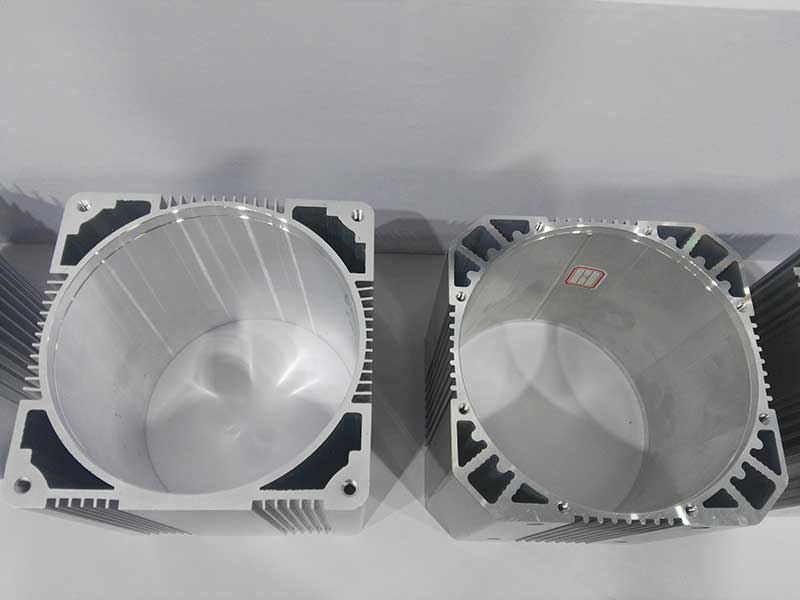
Aluminum Alloy Air-cooled Extruded Electric Motor Housing Manufacturers
2. Application Scenarios: A “Versatile Player” from Traditional Industry to New Energy
Leveraging the above advantages, aluminum alloy motor housings have penetrated nearly all motor-dependent sectors, including industry, transportation, home appliances, and new energy. Their applications can be further segmented by motor type and industry needs:
2.1 Traditional Industrial Motors: The “Cornerstone” for Stable Operation
In traditional industries, motors are widely used in fans, pumps, compressors, and machine tools—equipment requiring high reliability. Aluminum alloy housings are preferred here for their high strength, corrosion resistance, and processability. Examples include:
- Generators and Starter Motors: Automotive generators operate under high temperatures and vibration; aluminum alloy’s heat dissipation and vibration resistance extend generator life. Starter motors endure instantaneous high-current shocks, and aluminum alloy’s high strength prevents housing deformation.
- Environmental Air Conditioners and Air Compressor Motors: Environmental air conditioners (e.g., water-cooled) require heat dissipation and moisture resistance—aluminum alloy’s thermal conductivity and anodized surfaces meet these needs in humid environments. Air compressor motors face thermal stress from frequent starts/stops; aluminum’s low elastic modulus (~70GPa, 1/3 that of steel) absorbs stress, reducing crack risk.
2.2 New Energy Vehicles: The “Core Partner” for Drive Revolution
NEV (battery electric and hybrid) drive motors are the “power heart” of vehicles, demanding unprecedented power density, efficiency, and lightweighting. Aluminum alloy motor housings here exhibit two key trends:
- Heat Dissipation Imperative for High-Power-Density Motors: Tesla Model 3’s drive motor achieves 5kW/kg (vs. 0.2-0.3kW/kg for traditional ICEs). Its 6061 aluminum alloy extruded housing integrates spiral water-cooling channels and thermal conductive adhesive, limiting temperature rise to <80°C at 3,000rpm (industry standard: ≤100°C).
- Integrated Design and Lightweight Synergy: In BYD’s “e Platform 3.0” 8-in-1 electric drive system, the motor housing and reducer housing use integrated aluminum alloy extrusions, reducing part count by 30%, cutting weight by 15%, and improving system efficiency by 2% through optimized heat dissipation paths.
2.3 Special-Purpose Motors: The “Protection Expert” for Extreme Environments
In mining, marine, and aerospace applications, motors face dust, salt spray, and extreme temperatures. Aluminum alloy’s corrosion resistance and customizability shine:
- Mining Machinery Motors: Underground environments are humid and dusty. Aluminum alloy housings with anodizing + electrostatic spraying resist sulfur-containing gas corrosion.
- Marine Motors: Seawater splash and salt spray are major threats. Aluminum alloy housings undergo micro-arc oxidation surface treatment.
- Aerospace Motors: Weight constraints make aluminum’s low specific gravity critical. A drone drive motor uses 7-series aluminum alloy (e.g., 7075, strength comparable to steel), reducing housing weight by 40% vs. titanium alloy while meeting aerospace fatigue strength requirements.
2.4 Home Appliances and Consumer Electronics: The “Aesthetic Star” for Refined Experiences
In home appliances (e.g., AC compressor motors, washing machine drain pump motors) and consumer electronics (e.g., drone motors, high-speed hairdryer motors), aluminum alloy balances aesthetics and functionality:
- Home Appliance Motors: High-end AC indoor unit fans require housing matching the appliance’s appearance. Aluminum alloy, processed via CNC precision machining + anodized coloring (e.g., champagne gold, titanium gray), enables seamless integration with appliance panels, boosting product premium.
- Consumer Electronics Motors: High-speed hairdryer motors rotate at >100,000rpm, generating intense heat. Aluminum’s high thermal conductivity reduces surface temperatures by 10-15°C, preventing burns. Ultra-thin extrusion (wall thickness 1-2mm) enables motor miniaturization to meet design needs.
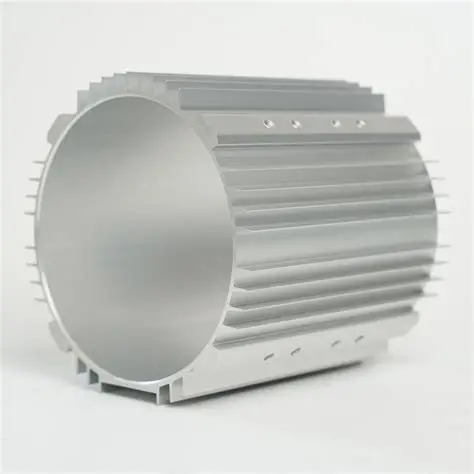
Aluminum alloy motor housing
3. Manufacturing Processes: The “Technical Code” from Profiles to Finished Products
Producing aluminum alloy motor housings involves more than simple extrusion—it integrates materials science, machining, heat treatment, and surface treatment. The core process chain includes:
3.1 Material Selection and Formulation Design: “Source Control” of Performance
Aluminum alloy grade and composition directly affect housing performance. Common materials include:
- 6xxx Series (6061, 6063): Containing magnesium and silicon, these offer balanced performance and easy extrusion, serving as the mainstream choice for industrial and home appliance motors (6063 is better for surface treatment; 6061 has higher strength).
- 7xxx Series (7075, 7005): With zinc, these are 1.5x stronger than 6xxx series, used in high-load applications like aerospace and premium industrial motors.
- Cast Aluminum Alloys: Though highly castable, they have lower strength, primarily used in low-end motors where weight is less critical.
3.2 Extrusion: “One-Step Molding” of Complex Structures
Extrusion is the core process for aluminum alloy motor housings, with parameters directly impacting precision and performance:
- Die Design: Molds are designed based on housing cross-sections (rectangular, circular, irregular), considering factors like flow ratio and die hole compression to avoid extrusion cracks.
- Extrusion Temperature and Speed: Temperature control (optimal for 6063 alloy) is critical—excessive speed causes surface scoring; excessive slowness reduces efficiency.
- Online Quenching: Extruded profiles require rapid cooling (air or water) to lock in supersaturated solid solutions, preparing for aging treatment.
3.3 Precision Machining and Post-Processing: “Relentless Pursuit” of Quality
Extruded profiles undergo further processing to meet assembly requirements:
- CNC Machining: High-precision milling (tolerance ±0.01mm) of mounting holes, positioning slots, and sealing surfaces ensures compatibility with motor end caps, bearings, and other components.
- Surface Treatment:
- Anodizing: Electrochemically deposits an oxide film to enhance corrosion resistance and aesthetics.
- Electrophoretic Painting: Immerses oxidized profiles in paint baths, using electric fields to form uniform coatings—ideal for outdoor or humid environments.
- Fluorocarbon Spraying: Uses polyvinylidene fluoride (PVDF) coatings with over 20-year weather resistance, primarily for premium architectural or marine motors.
- Sealing and Protection: Cooling channels in water-cooled housings undergo leak testing; standard housings receive impregnation treatment to enhance insulation.
3.4 Inspection and Verification: “Quality Gates” Across the Process
To ensure performance, housings undergo rigorous testing:
- Dimensional Inspection: Coordinate Measuring Machines (CMMs) verify critical dimensions (wall thickness, hole positions, cooling channel locations).
- Mechanical Property Testing: Universal testing machines measure tensile strength, yield strength, and elongation.
- Thermal Performance Testing
- Corrosion Resistance Testing
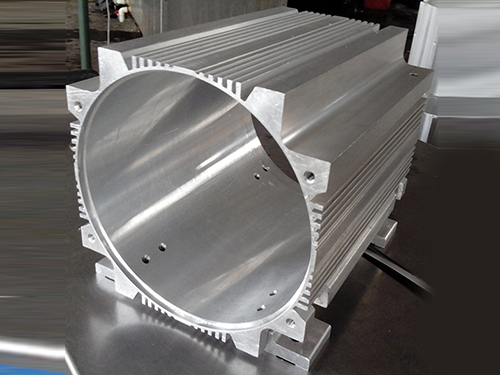
Aluminum alloy motor housing
4. Industry Trends: Technological Upgrades from “Functional” to “Premium”
As global industry shifts toward intelligence and sustainability, aluminum alloy motor housing innovation is trending:
4.1 “Precision” Material Performance: Customization by Demand
Future aluminum alloys will evolve from “general-purpose” to “functional”:
- High-Thermal-Conductivity Aluminum Alloys: Adding beryllium, silicon, etc., to boost thermal conductivity to >220W/(m·K), meeting heat dissipation needs for ultra-high-speed motors (>8,000rpm).
- Lightweight Aluminum Alloys: Developing high-strength alloys (tensile strength ≥300MPa) with low density (≤2.5g/cm³) to further reduce motor weight.
- Eco-Friendly Aluminum Alloys: Reducing heavy metal pollution and VOC emissions during production.
4.2 “Intelligent” Manufacturing: An Efficiency Revolution
Intelligent manufacturing is reshaping aluminum alloy motor housing production… [Content continues per original structure.
Aluminum alloy motor housing
5. Shijun Hongmao Aluminum Industry: A 19-Year Commitment to “Quality Assurance”
Choosing a reliable, full-service supplier is critical for aluminum alloy motor housings. With 19 years of industry experience, Shijun Hongmao Aluminum Industry has become a preferred partner for domestic and international motor manufacturers, thanks to:
5.1 Full-Chain Technical Capabilities: “One-Stop Service” from R&D to Mass Production
Shijun Hongmao has built capabilities across the entire value chain—”material R&D → die design → extrusion → precision machining → surface treatment → testing & certification”—supporting clients from design to mass production.
5.2 Stringent Quality Control: A “Quality Ethos” of 100% Compliance with Drawings
Shijun Hongmao adheres to ISO 9001 quality management, setting checkpoints from raw material incoming to finished product delivery…
5.3 Professional Technical Support: A 24/7 “Engineer Team”
5.4 Rich Industry Cases: Trustworthy “Practical Experience”
Aluminum alloy motor housing
Conclusion
The development of aluminum alloy motor housings mirrors both advancements in material science and the global industrial shift toward efficiency, sustainability, and intelligence. From traditional “protective components” to future “intelligent integrated modules,” aluminum alloy housings, with their irreplaceable performance, are becoming a key pillar in motor industry upgrading. For buyers, partnering with a technically robust, full-service supplier like Shijun Hongmao not only secures high-quality products but also injects core competitiveness into their own offerings through customized solutions.
Learn more :https://www.sjhmalu.com/
Follow us:https://www.youtube.com/@ShijunHongmaoAluminum
Aluminum alloy motor housing
aluminium and aluminium,aluminum manufacturers,aluminum fabrication,aluminum company
product manufacturing,aluminium al 6061,aluminum alloy 6063,2024aluminum ,aluminum alloy,aluminum profiles,aluminum housing,motor housing ,casting housing.